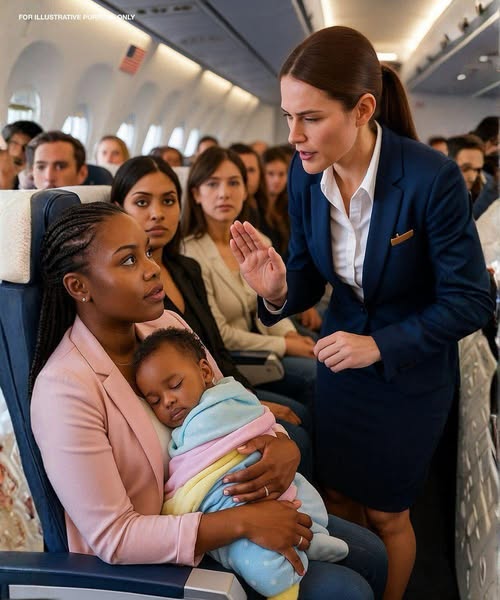
Flight 847 was moments from departure when a sharp slap echoed through the first-class cabin, instantly silencing the hum of conversation. Flight attendant Sandra Mitchell had just struck Kesha Thompson, a Black mother holding her six-month-old daughter, Zoe. The baby cried louder, clutching her mother as shocked passengers instinctively reached for their phones, assuming they were witnessing justified discipline. An elderly woman nearby nodded approvingly, praising what she saw as “firm authority.”
Kesha’s cheek stung, but her expression stayed composed. She gently adjusted Zoe’s blanket, her gold-status boarding pass resting clearly on her lap, unnoticed and ignored. The cabin was quiet except for Zoe’s sobs and the clicks of recording phones. It was the kind of moment many parents fear—being judged publicly without a single offer of help.
Mitchell straightened her uniform, energized by the attention. Addressing the cabin loudly, she apologized for the “disruption,” implying that some passengers simply lacked proper travel manners. Several people murmured in agreement. A sharply dressed businessman openly criticized Kesha, reinforcing the growing narrative that she was the problem.
Kesha said nothing, softly rocking Zoe. Her calm only seemed to irritate those watching. Mitchell radioed the cockpit, dramatically reporting a “disruptive passenger with an infant” and requesting immediate removal before departure, claiming the situation had already caused delays.
Kesha glanced at her phone. Fourteen minutes until departure. A notification about a corporate legal merger appeared briefly before she locked the screen. When she quietly mentioned her assigned seat and first-class ticket, Mitchell laughed dismissively, accusing her of scamming an upgrade and making it clear she had already judged her.
Across the aisle, a college student streamed the incident live on TikTok. The viewer count climbed rapidly, but the comments were cruel, criticizing Kesha’s parenting and praising the flight attendant’s behavior. Mitchell leaned into the performance, citing airline policy and threatening removal if Kesha didn’t comply.
As Kesha reached into her bag for baby supplies, a glimpse of an unfamiliar executive airline card appeared before disappearing again. Her phone buzzed—Skylink Airways Executive Office—but she declined the call. Mitchell sneered, making another degrading remark that drew laughter from nearby passengers.
The tension escalated as Captain Williams announced final boarding procedures. Kesha checked her watch, engraved with a private message from her husband. Mitchell issued a final warning, threatening federal air marshals. Though thousands were now watching online, some viewers began questioning why the mother remained so calm while the crew grew increasingly aggressive.
A business passenger quietly posted about the incident on an aviation industry forum, raising concerns about discrimination. Meanwhile, Mitchell radioed again for security. Kesha calmly suggested verifying her passenger status before escalating further, only to be mocked and dismissed.
More passengers joined the criticism. Phones were everywhere. Social media feeds filled with live videos as the situation trended locally. Yet Kesha stayed composed, soothing Zoe, her calm unsettling those paying close attention.
Captain Derek Williams entered first class, siding immediately with his crew. Federal air marshals appeared, transforming a customer service issue into a security scene. Online viewers speculated wildly, many assuming Kesha was about to be arrested.
Kesha quietly checked her phone again. When questioned, she simply mentioned the time. Her refusal to react emotionally only intensified the captain’s impatience. Security and ground crews prepared to remove her.
Despite growing outrage from passengers eager to depart, Kesha requested five more minutes. Her request was mocked and denied. The narrative was fixed: disruptive mother versus professional authority.
What most people missed was how deliberately calm she remained. Another call from Skylink’s corporate emergency line flashed on her screen. She declined it again.
Ground security boarded as the live stream numbers exploded. Officers ordered Kesha to leave the aircraft. She looked around the cabin, at the phones, the judgment, the authority stacked against her, and quietly counted down the minutes.
As security moved closer, Kesha made one call and placed it on speaker. Her voice was calm. “Hi, honey. I’m having some trouble on your airline.”
The response froze the cabin. The voice belonged to Marcus Thompson, CEO of Skylink Airways. He demanded to know the aircraft number. When Kesha answered, his tone turned icy. He ordered everyone to step away from his wife immediately.
Shock rippled through the cabin. Mitchell went pale. Captain Williams stumbled back as the realization hit. Online, viewers reacted instantly, calling out the consequences they knew were coming.
Security backed away. Marcus continued, stating he was watching the live stream and would personally handle the situation. Kesha gently rocked Zoe as the power dynamic shifted in real time.
When Kesha calmly mentioned she’d been slapped, the cabin collectively realized they had recorded the assault of the airline CEO’s wife. Captain Williams attempted to explain, but Marcus cut him off, citing tens of thousands of witnesses watching live.
Mitchell tried to minimize the incident, but Marcus made it clear her words were being recorded for legal review. The aviation forum post exploded as professionals realized they were watching a defining moment for the industry.
Kesha explained softly that her identity was never the point. The real issue was how assumptions shape treatment. Marcus addressed the cabin directly, calling out discrimination and emphasizing accountability.
Zoe laughed, breaking the tension. Kesha smiled, her dignity untouched. Federal investigators boarded as cameras flashed.
The woman they tried to remove didn’t just have a ticket—she owned the airline. And the entire world had just watched it unfold.